Who is Jindra Čapek?
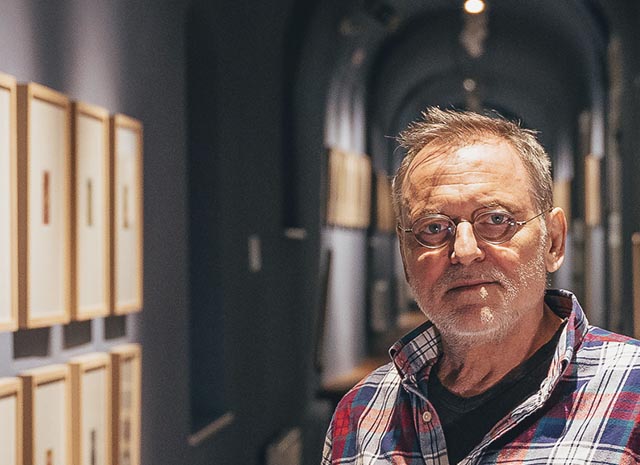
Dear visitors, ladies and gentlemen, let me introduce myself. My name is Jan Příbaň.
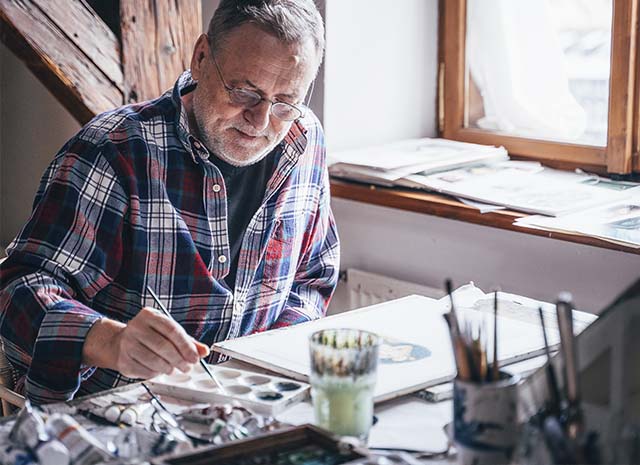
Jindra Čapek and I are old friends, and that was the reason why the Deputy Mayor of Český Krumlov and the cultural officer, Mr. Ivo Janoušek, asked me to tell few words about the exhibiting artist. There are many reviews about Jindra Čapek and his book illustrations in various prestigious papers all over the world. However, I want to present him a little bit differently. We met about fifty years ago in Freiburg, southern Germany. We were both students, Jindra at the Academy of Fine Arts, me at the Faculty of Medicine. We were living in a wild manner while enjoying academic freedom in a beautiful town at the foot of the Black Forest mountains. I lived in an old, somewhat neglected house in the city center with other college students. Jindra often came round. One day he stopped unusually early in the morning: A rather athletic figure in ragged jeans, light-skinned Spanish boots on his legs. A full-length advertisement for French cigarettes Gitanes with a dancing Gypsy on his T-shirt, on the lapel of the jacket a fresh red carnation. He looked impressive. He certainly hadn't slept at home that night. He joined us in the kitchen, where we were drinking coffee. He drew tobacco from his pocket and asked us for cigarette papers. None of us could serve him. Jindra promptly ripped a piece of paper from a newspaper and began packing a cigarette. Other students alerted him to harmful substances in the press. Jindra dispelled their fears, saying that the Red Army packed their cigarettes in Soviet Truth and made their way to Berlin. He took a pencil and drew a Red Army man with a submachine gun in the area of Berlin on a map of Europe hanging over the entire wall in the kitchen. The Red Army man looked great. I have recently met one of our former roommates. He still remembers the story. We enjoyed going with friends to the French Vosges located on the Rhine west of Freiburg. Jindra was not to be missed on these trips. The Vosges reminded us our Šumava. We always camped by a small lake. An incredibly romantic place, a lake half overgrown with water lilies, in the evening you could hear the croaking of frogs, old fir trees were growing on the bank. Once we went shopping to a nearby town. We were ragged, overgrown, and we smelled the campfire smoke. In a small self-service store, we immediately became the center of attention - just suspicious individuals speaking some strange language. Maybe they thought we were on the run from the law. Particulary Jindra was sticking out, dressed in an oversized Swiss army ankle-length coat, in his favourite wellies on the feet - his fashion style has not changed much so far, by the way.
Already a gourmet, he suggested buying rabbit pâté. However, it turned out that none of us knew how to say it in French. In a wink, Jindra picked up an empty box and drew an almost life-size hare. He took the trouble with the drawing, the hare looked as if it had been painted by the famous Albrecht Dürer himself. Jindra approached the butcher's counter and, with the words: "paté, s'il vous plaît", pointed to the fresh drawing. The butcher beamed, but the atmosphere throughout the store was suddenly friendly and cheerful. They even invited us to a wine tasting.
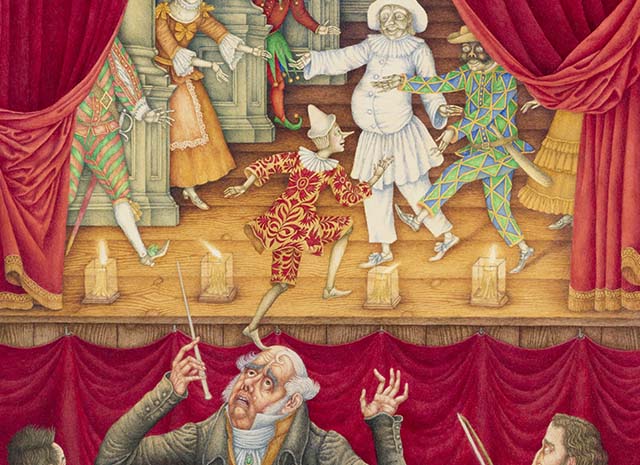
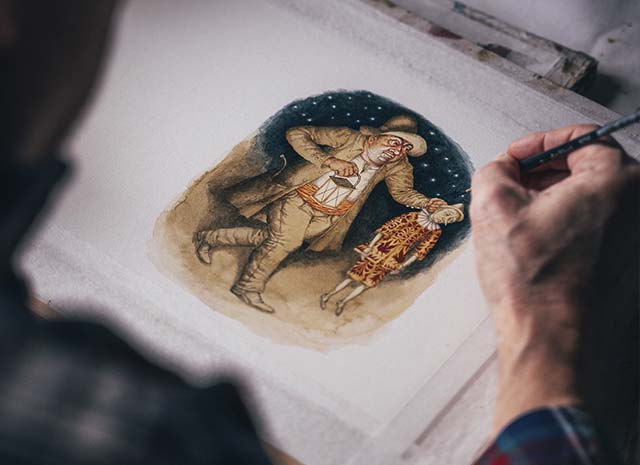
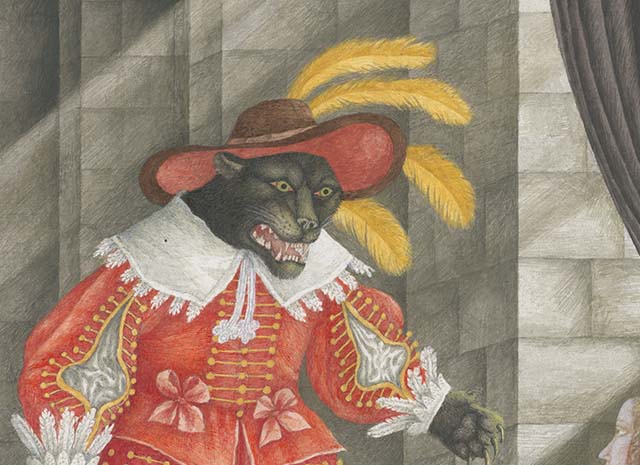
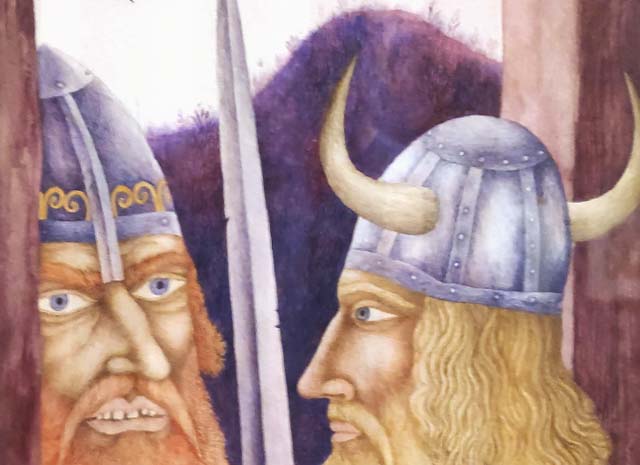
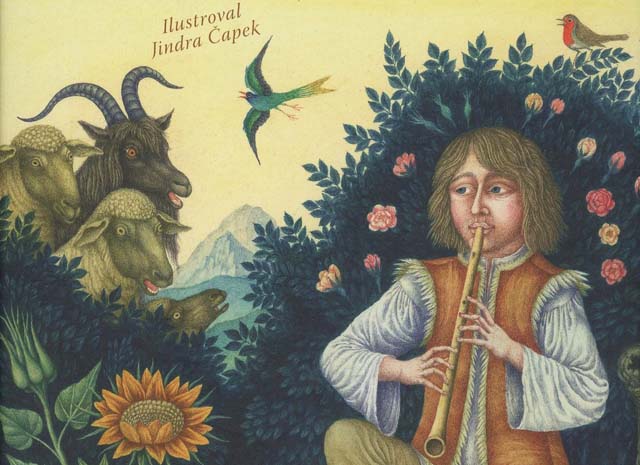
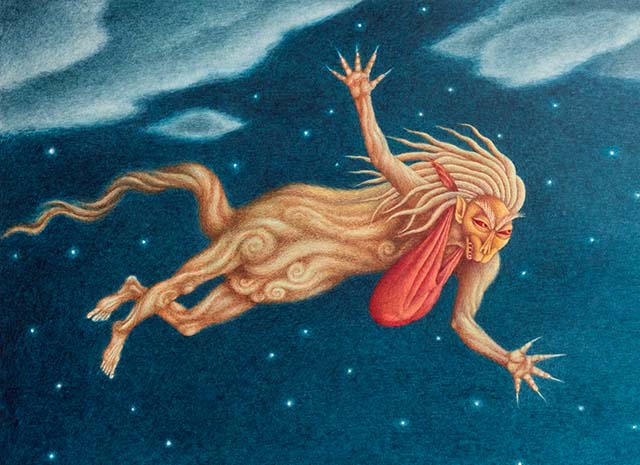
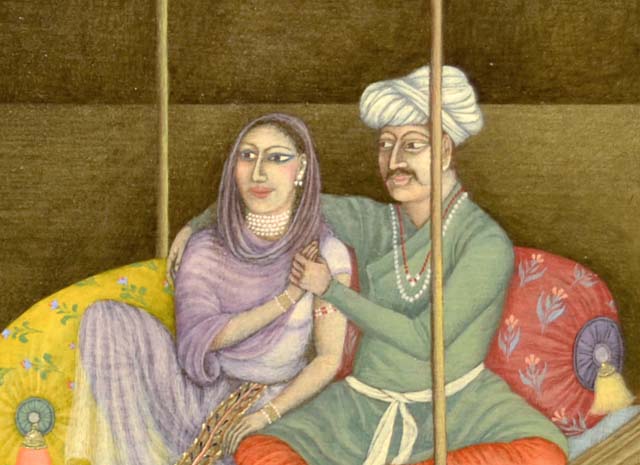
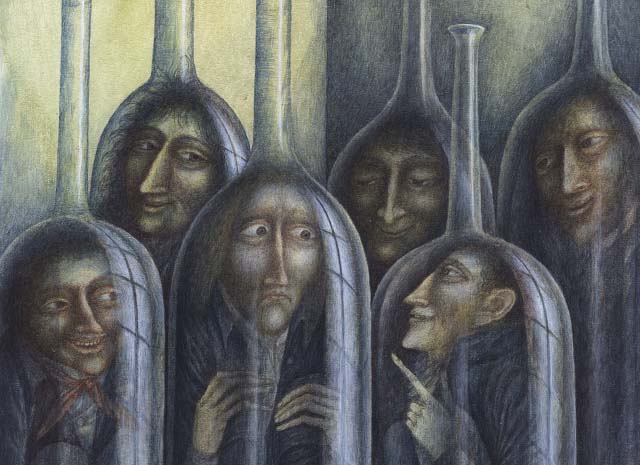
I have recently reminded Jindra of this episode and he replied: "Well, you see how it is possible to communicate easily with the help of pictures, so the first system of writing was actually created." Unfortunately, the Dürer hare has not been preserved, the coat from the Swiss army also disappeared. Jindra's girlfriend, later his first wife, took care of it. She did not like Jindra much wearing his coat. Jindra nevertheless immortalized the scenery of our lake - he painted a beautiful oil in the style of old masters, which he had admired as a child while wandering with his parents in South Bohemian castles. It can almost be said that Čapek's period of his free creation ended with this episode. Although he has never left his freelance work, he soon began to devote himself only to illustration, with which he had previously flirted. His first book, in collaboration with the Swiss writer Max Bolliger, was very successful and was published in many countries around the world. And what else to add to the conclusion of Čapek's work? His work is characterized by imagination, fantasy, softness and precision. It reveals inspiration from old German and Dutch masters. But after all, let the visitors of the exhibition judge it. I wish you a nice experience!